What Clothes Should My Staff Wear? Branded Apparel by Job Role
So you've decided to put your team in branded apparel. Good call. Matching staff uniforms are basically free advertising, an instant trust signal, and a way to make your business look way more polished than it probably is on the inside (no judgments, same here).
But then you sit down to actually order, and… now what? Do you put the cleaning crew in polos? Are aprons enough for your baristas? What goes on with the warehouse guys? Is a quarter-zip too much for the receptionist?
Take a breath. This is the part where most business owners freeze up and end up just buying everyone the same t-shirt, which, listen, is fine, but it's not great. Different roles need different things, and dressing your team thoughtfully sends a message that you actually care about how they show up.
So here's the role-by-role breakdown. Find your team's setup below and skip to it.
Why Branded Apparel Matters in the First Place
Quick pep talk before we get into it.
Branded apparel does three big things at once. It identifies your staff so customers know who to ask for help (huge in retail and hospitality). It builds team cohesion, because there's something about everyone wearing the same logo that just… works. And it markets your business every time your team is in public at the grocery store, pumping gas, or grabbing lunch. Free advertising on legs.
The trick is matching the type of apparel to the type of work. A heavy cotton tee is great for the warehouse crew, but feels weird on your front desk manager. A crisp button-down looks sharp on management but would be ruined by lunch on a kitchen line.
Let's break it down.
1. Front of House and Customer-Facing Staff
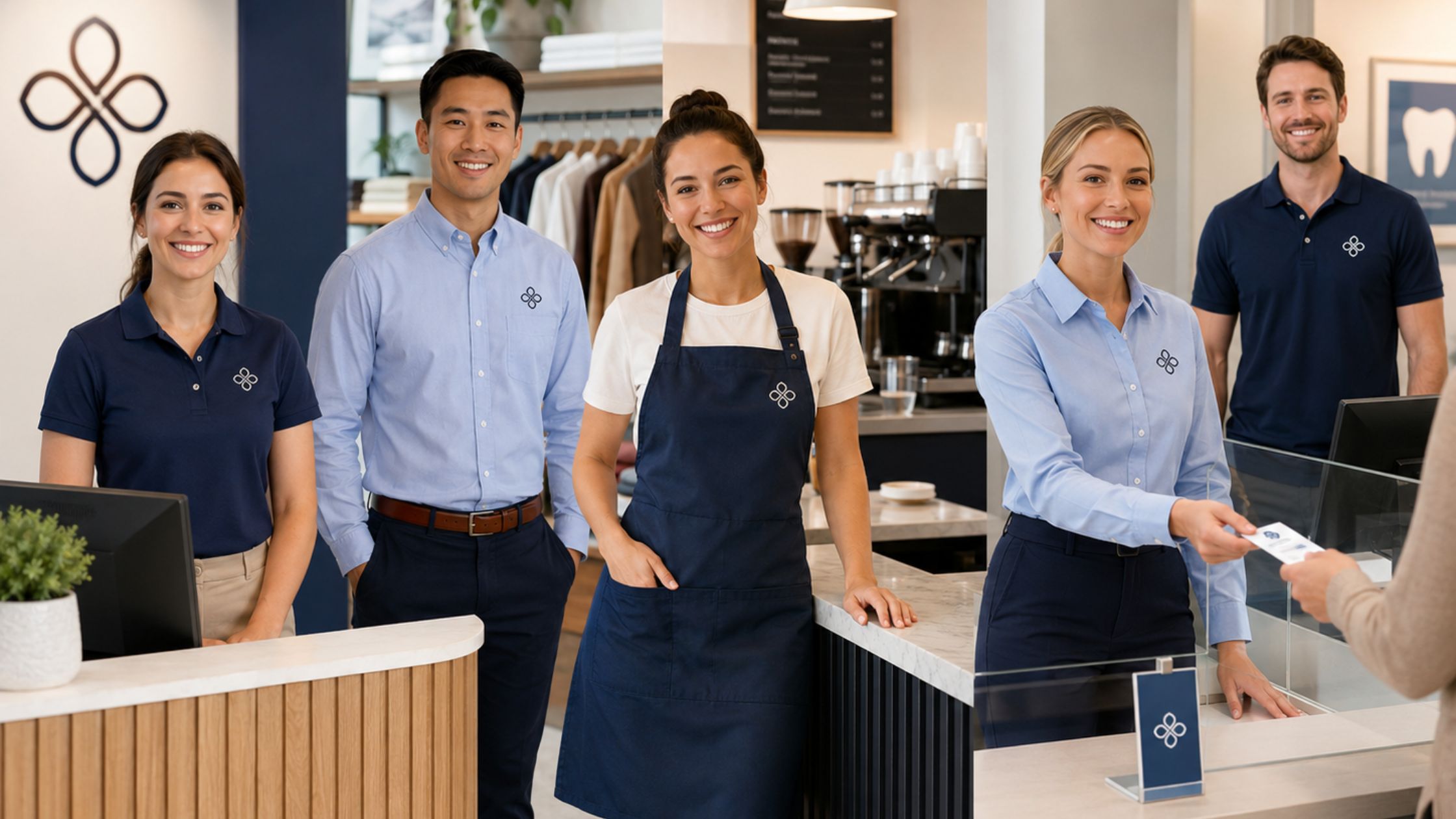
Think receptionists, retail associates, hosts, bank tellers, dental office front desks, and anyone whose main job involves talking to your customers face-to-face.
What works: Branded polos, button-downs, or fitted tees in your brand colors. Embroidered logos on the chest read more polished than a giant screen-printed logo across the front. If your vibe is more casual (cafes, boutique shops), branded aprons over street clothes can be enough.
Why: This is the first impression. The apparel needs to say "I work here and I'm approachable," not "I'm here to fix your plumbing." Embroidery holds up well to constant washing and won't crack as screen print does after fifty cycles.
Shop the look here.
2. Cleaning and Janitorial Staff
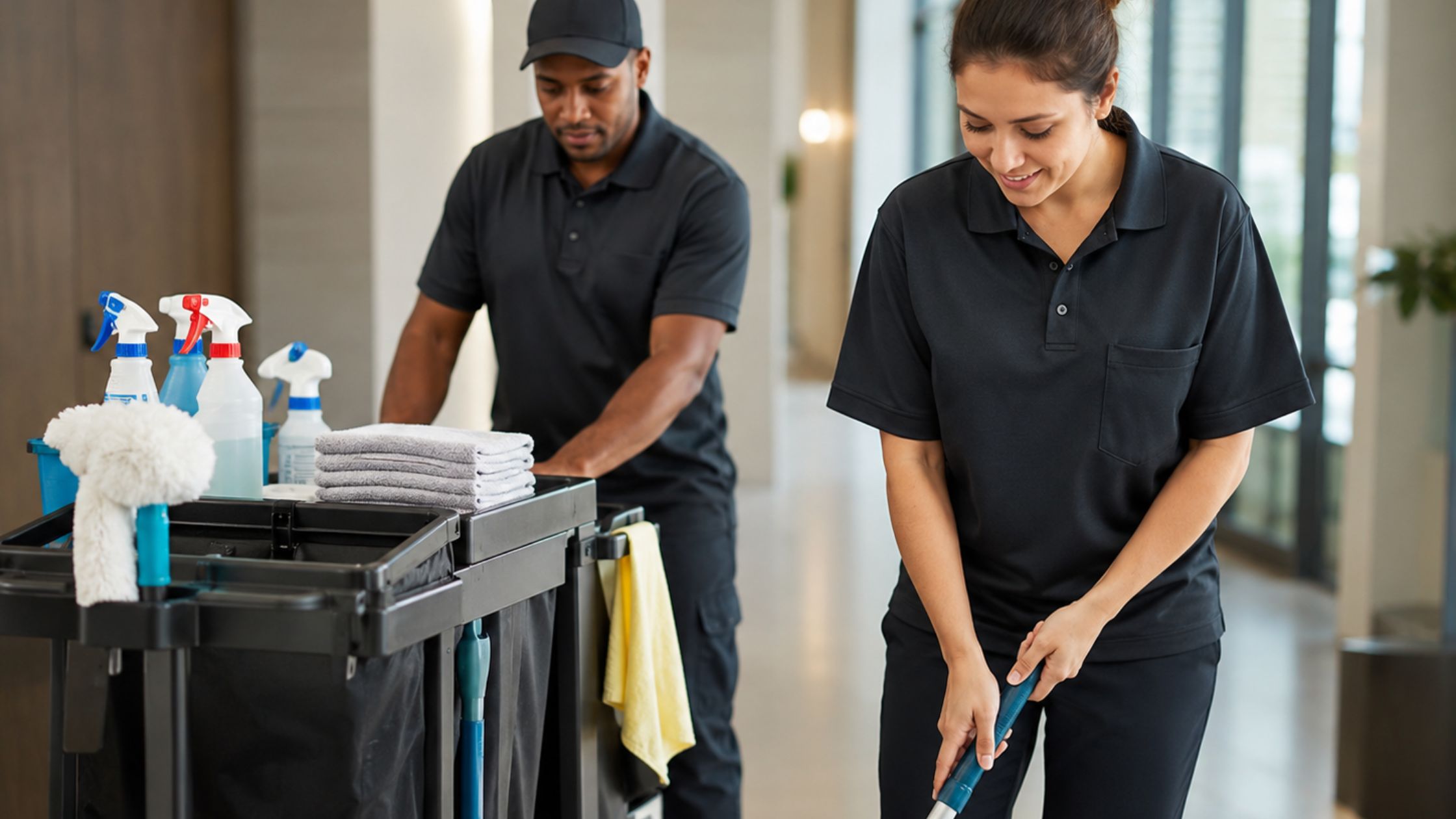
The unsung heroes who deserve apparel that actually holds up.
What works: Heavy-cotton work shirts or durable polos in darker colors (stains, you know how it is). Embroidered logos, not screen print, industrial laundering, which destroys screen print fast. Add branded caps if they work in food service or hospitality settings where hair containment matters.
Why: This crew is hard on their clothes. You need fabric that can survive bleach, hot water, and being scrubbed against a hundred surfaces a day. Dark colors hide the inevitable. Embroidery is the only print method that won't peel after a month.
Shop the look here.
3. Kitchen and Back of House
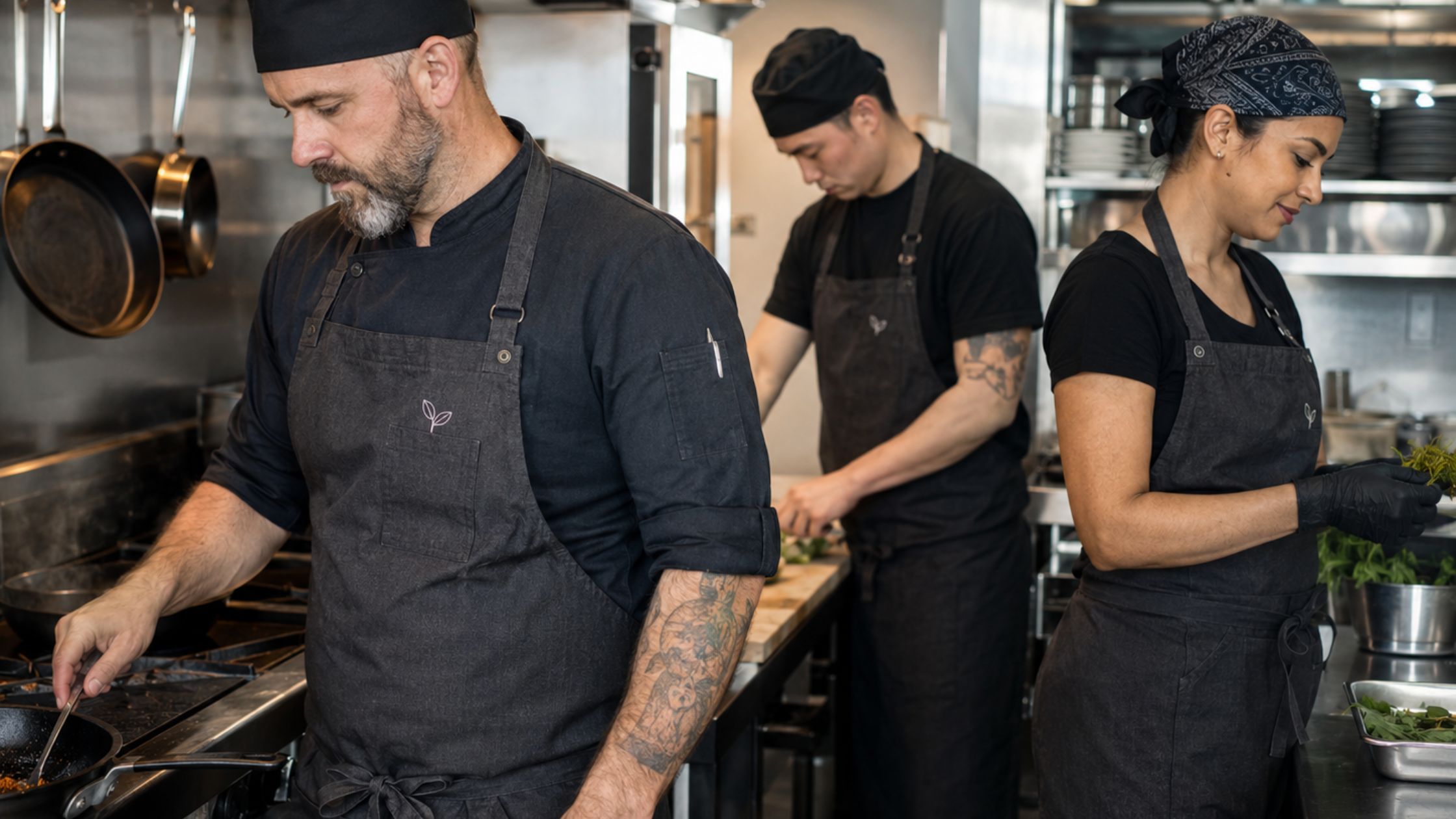
Chefs, line cooks, dishwashers, prep staff. The people behind the magic.
What works: Branded chef coats, kitchen-friendly tees in dark colors, branded aprons (the real workhorses here), and bandanas or branded caps for hair containment. Slip-resistant considerations matter too, but that's usually shoes, not apparel.
Why: Heat, grease, steam, and the occasional flying tomato sauce kitchen apparel has to handle a lot. Aprons take most of the abuse, which means your underlying shirts last longer. Bonus: a well-branded apron is one of the most photographed pieces of workwear in any restaurant. Customers post that stuff on Instagram constantly.
Shop the look here.
4. Warehouse, Fleet, and Delivery Drivers
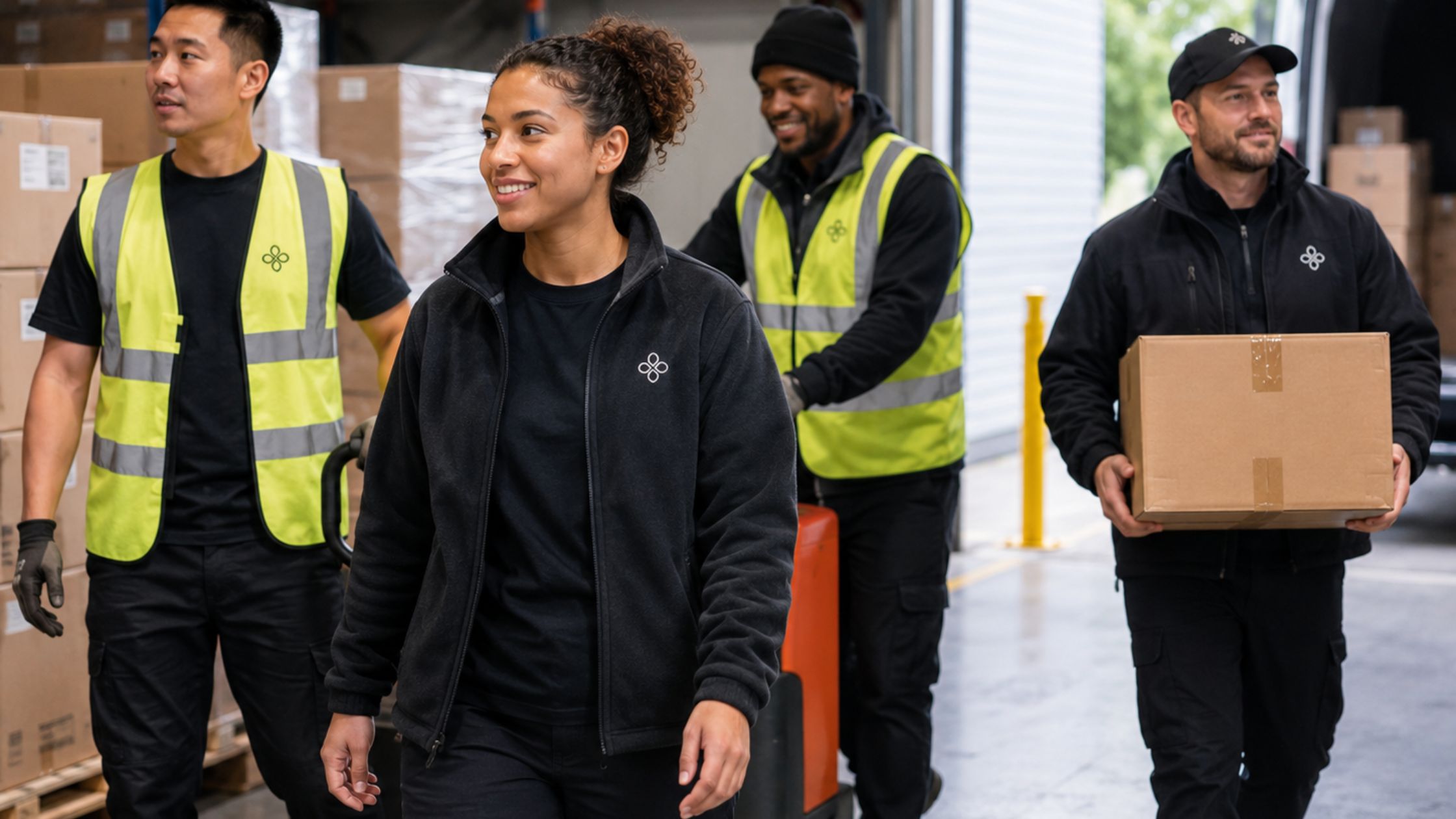
The team is keeping things moving behind the scenes.
What works: Branded work shirts or heavyweight tees, hi-vis safety vests with your logo (a non-negotiable if they're around forklifts or trucks), branded fleece or softshell jackets for outdoor work, beanies for winter, and durable work pants if you want to go all in.
Why: Comfort and safety first. These folks are on their feet all day, often outdoors or in temperature-extreme spaces. Hi-vis isn't just smart in a lot of warehouses, it's required. Layering matters too, because nobody wants to be the boss who forgot their crew works outside in February.
Shop the look here.
5. Management and Office Staff
The polished tier.
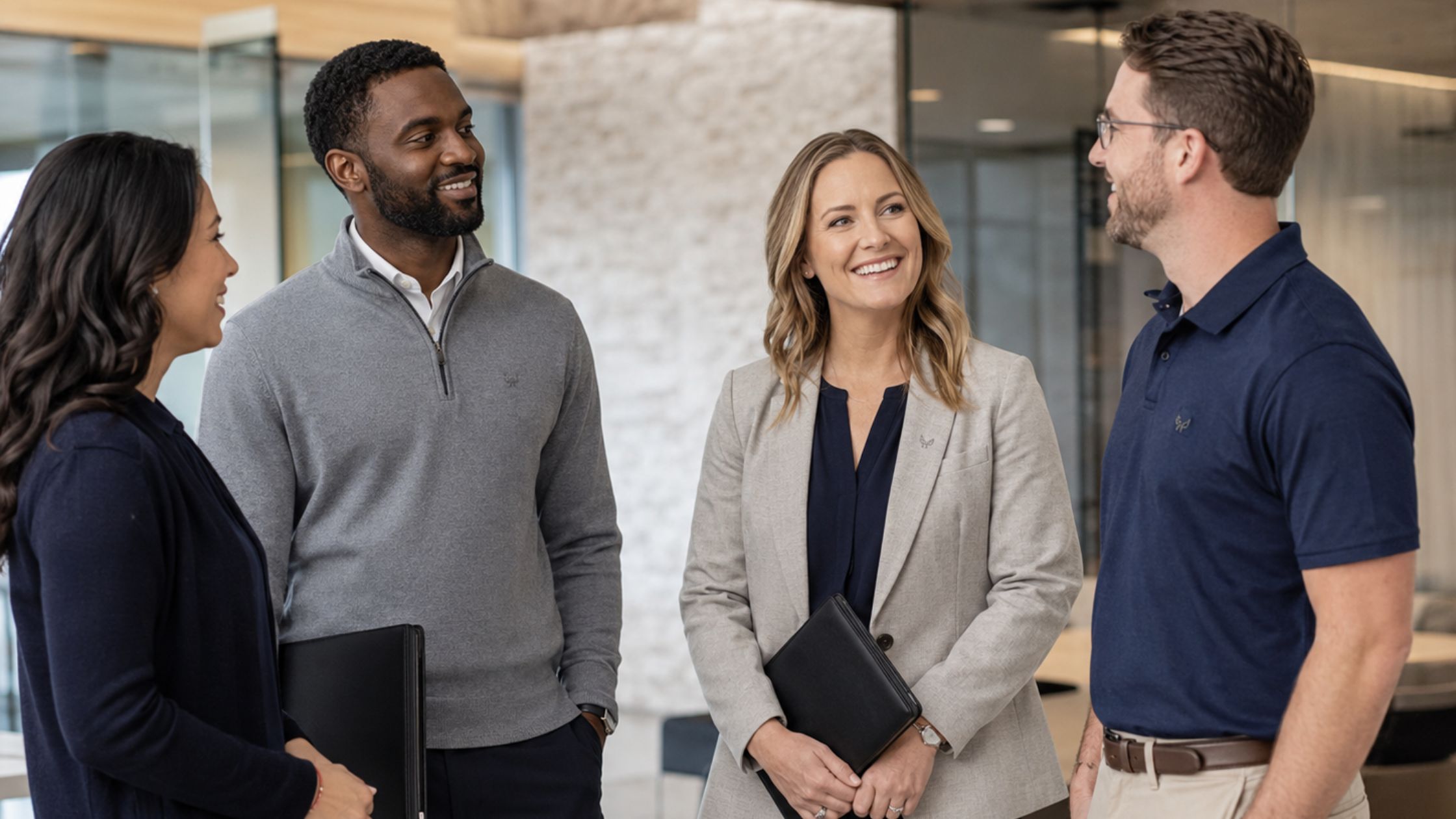
What works: Quarter-zips, button-downs, branded blazers or cardigans, and well-made polos. Think "elevated business casual with a subtle logo," not "company picnic 2014."
Why: Management often takes client meetings, gives tours, or represents the company at industry events. Their apparel should look intentional but not gimmicky. Embroidered logos in matching thread colors (tonal embroidery) are a great move here, visible up close, subtle from across the room.
Shop the look here.
6. Sales Team and Field Reps
Your road warriors.
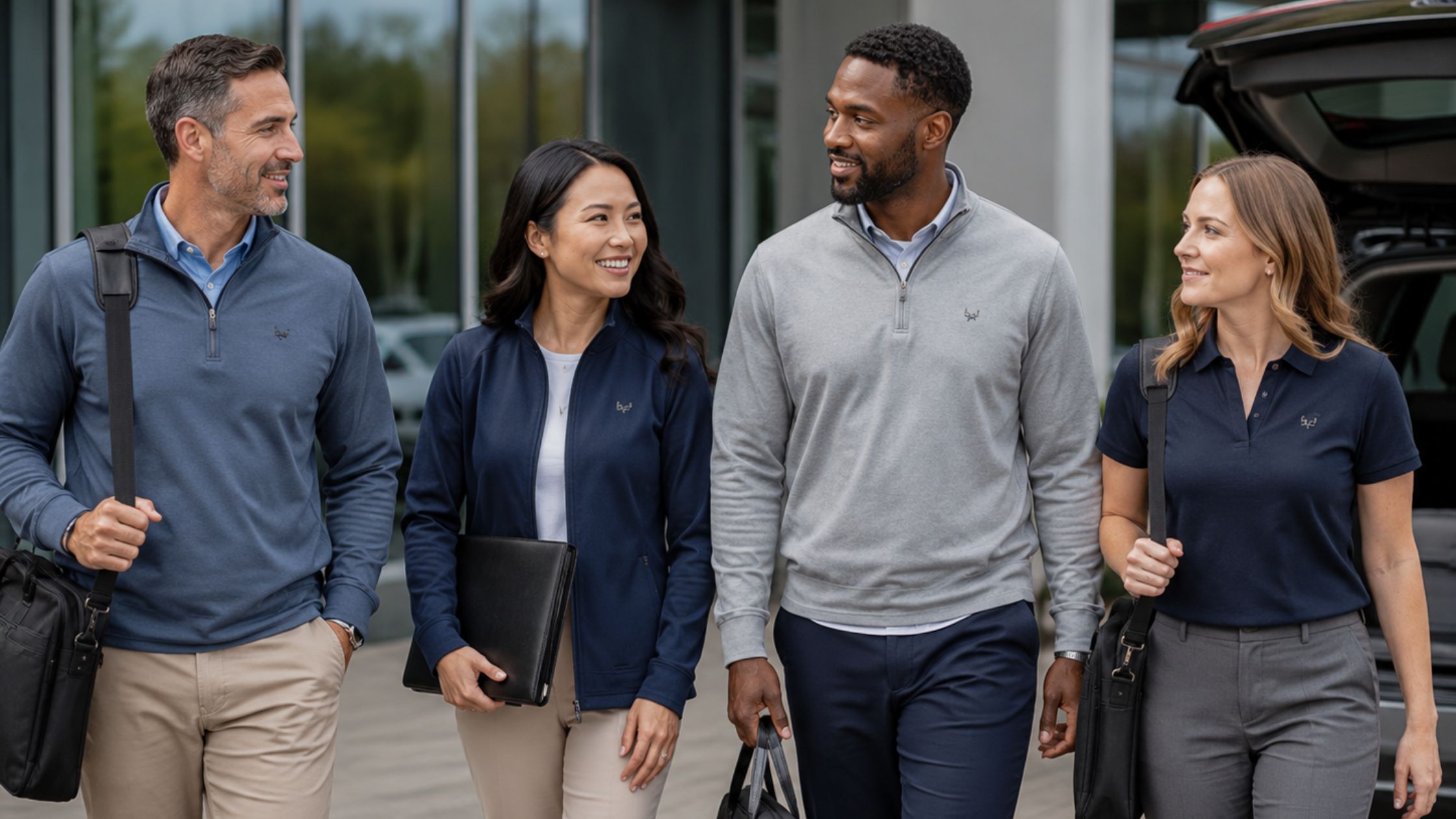
What works: Polos and quarter-zips that travel well (wrinkle-resistant fabrics are your friend), branded outerwear for client visits in cold weather, branded portfolios or bags, and a great-fitting tee for casual client environments.
Why: Field reps live out of their cars. Their apparel needs to look client-ready straight out of a duffel bag. Performance fabrics that don't wrinkle, plus a branded jacket they can throw on for a meeting, basically cover them for any scenario.
Shop the look here.
7. Event, Pop-Up, and Trade Show Staff
The crew working booths, conferences, festivals, and brand activations.
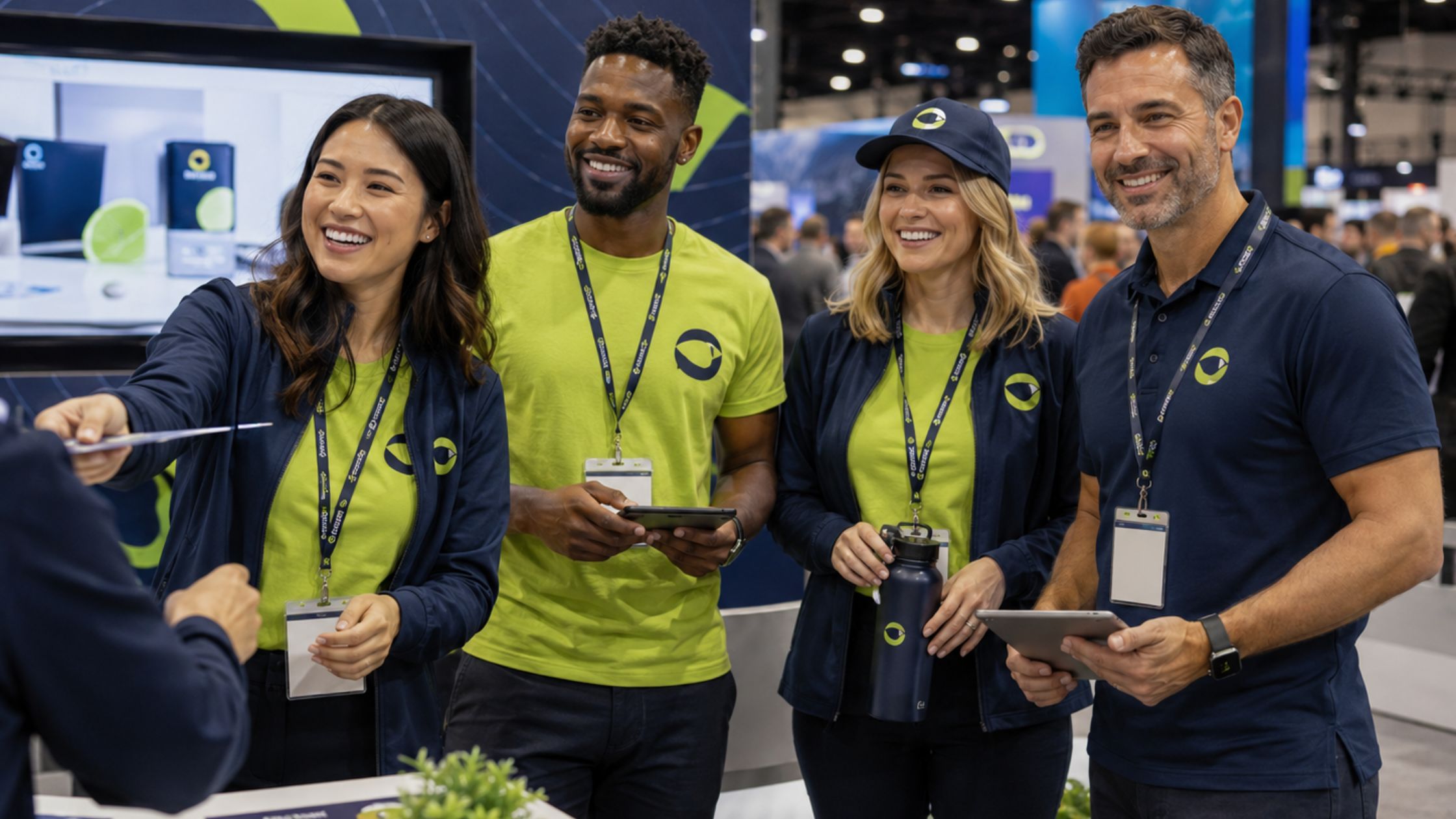
What works: Bold branded tees or polos that read clearly from across a crowded room, branded lanyards, branded hats, and matching outerwear if it's an outdoor event. Bigger, clearer logos are actually a feature here, not a bug.
Why: Visibility is the whole point. If someone can't tell who works the booth at twenty paces, the apparel isn't doing its job. This is also where you can have a little fun with statement pieces, a bright color, a clever back-of-shirt tagline, something that gets noticed in event photos.
Shop the look here.
8. Construction, Trades, and Outdoor Crews
The hardest-working apparel on this list.
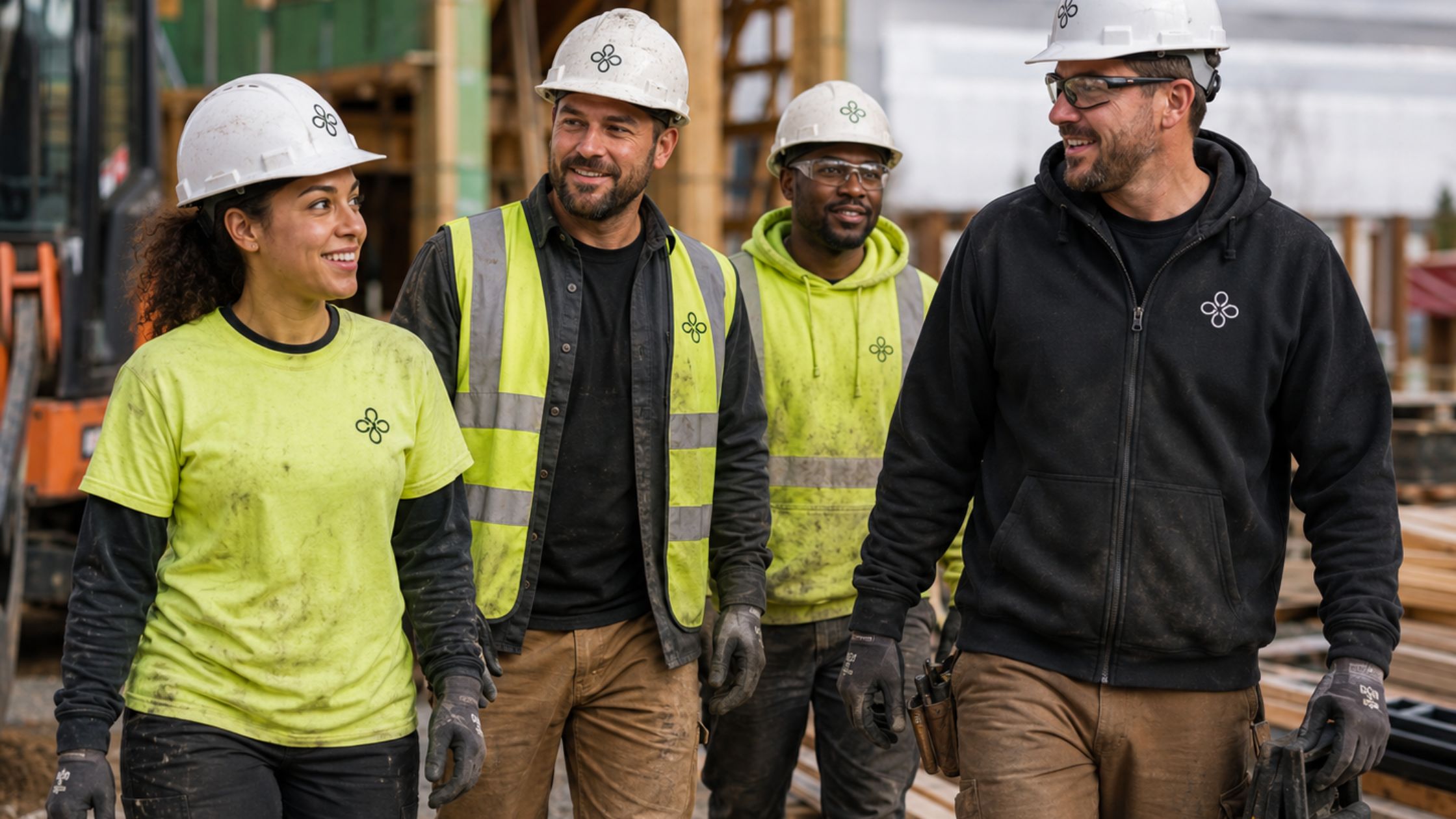
What works: Hi-vis tees and jackets, hard hat decals (often overlooked, very effective), heavyweight branded work shirts, durable hoodies for cooler days, and weather-appropriate outerwear. Embroidery only, screen print won't survive this kind of wear.
Why: Job sites are brutal on clothing. You need fabric that can handle abrasion, sweat, dirt, and the occasional snag on something sharp. Hi-vis serves double duty as branding and safety, which is a win-win. Hard hat decals are one of the cheapest, highest-visibility branding moves you can make.
Shop the look here.
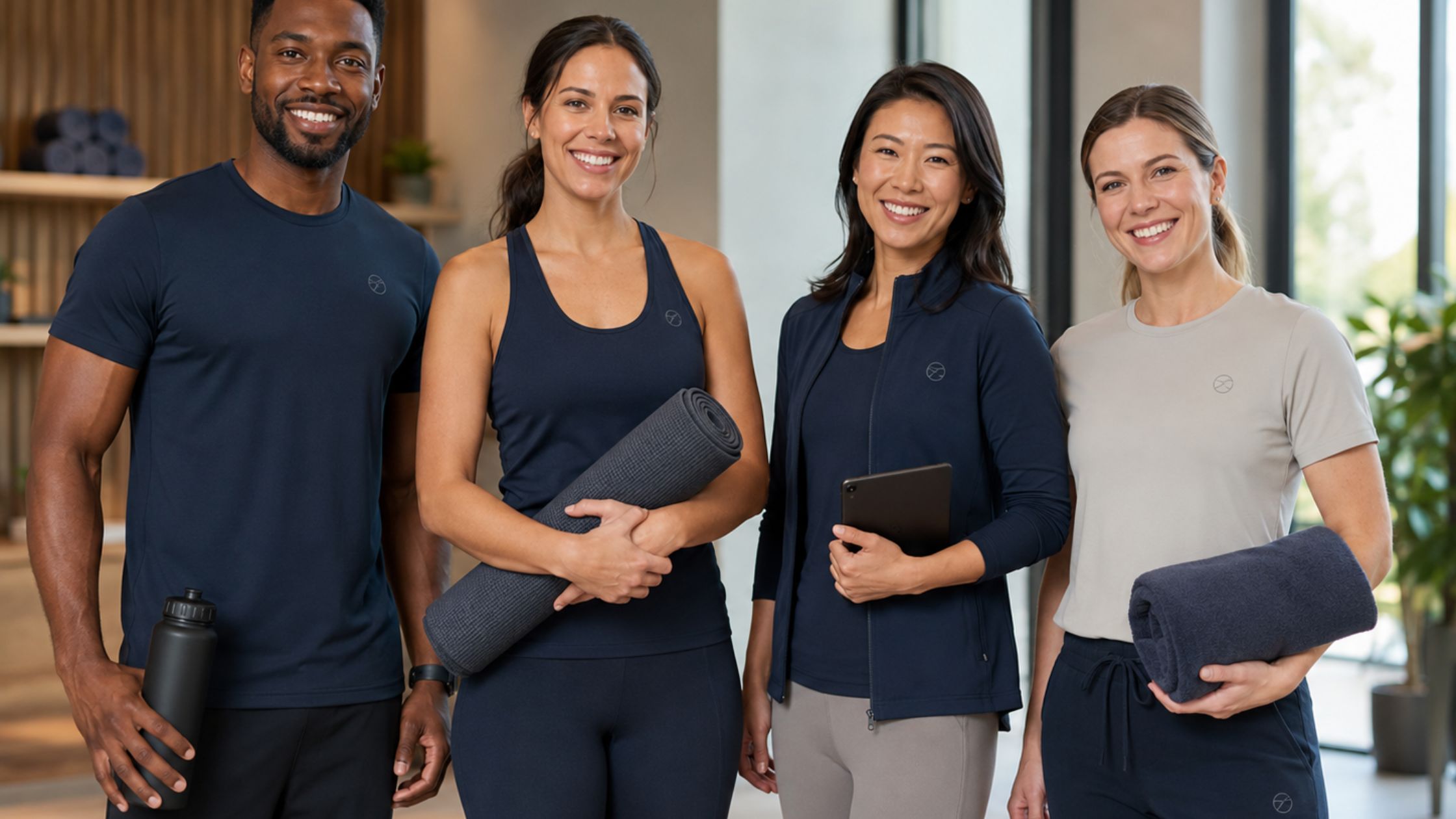
9. Fitness and Wellness Staff
Trainers, instructors, studio managers, spa workers.
What works: Moisture-wicking performance tees, branded tanks, leggings, and branded water bottles or towels as part of the kit. Logos should be smaller and tonal — nobody wants to feel like a billboard while teaching a yoga class.
Why: This crew moves all day. Their apparel needs to perform, not just look the part. Performance fabrics that wick sweat and stretch with movement are non-negotiable. And honestly? Branded gym gear is the most likely uniform on this list to be worn outside of work hours, basically extending your free advertising.
Shop the look here.
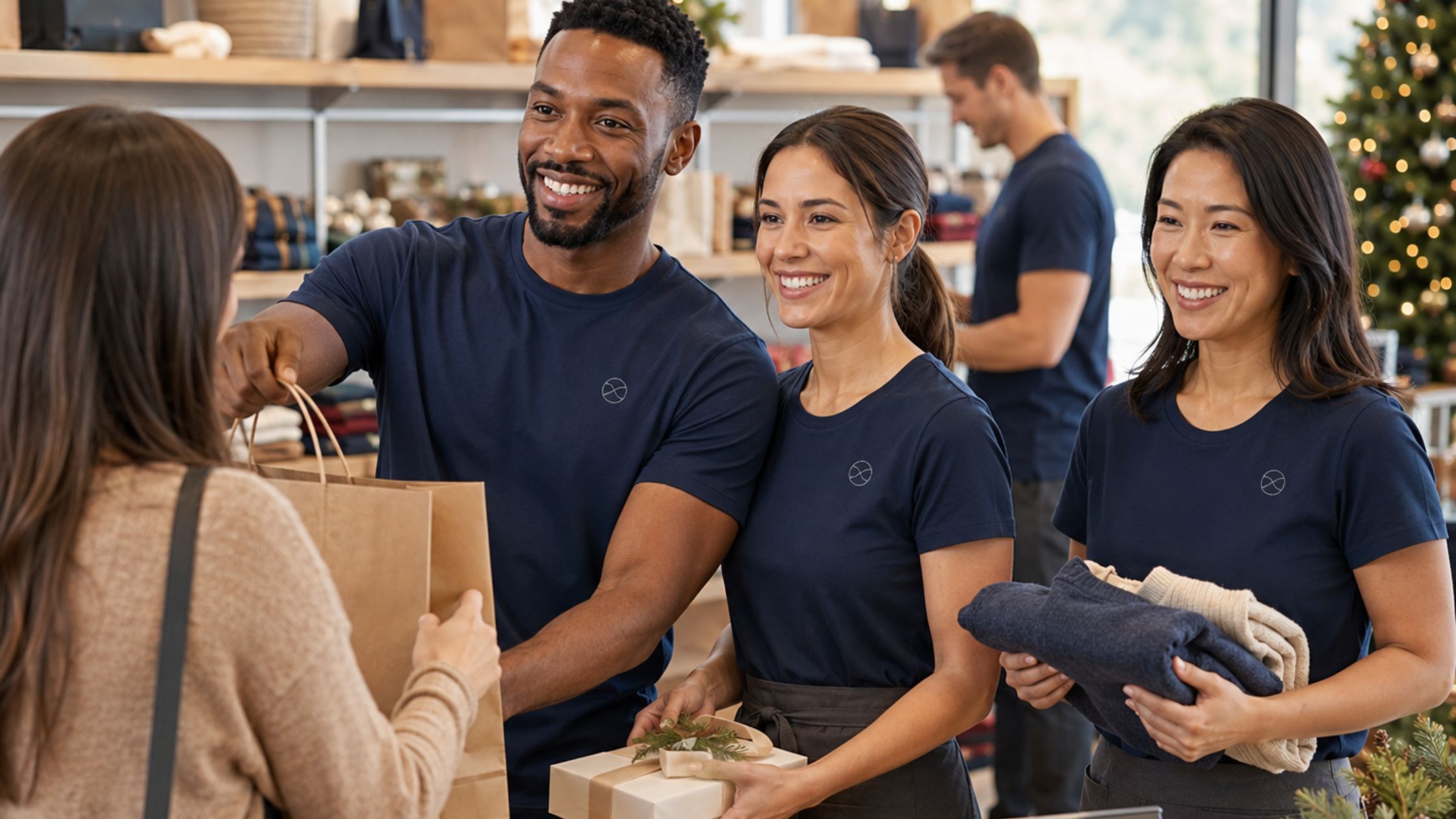
10. Seasonal and Temporary Staff
The "we need shirts for the holiday rush" crew.
What works: Budget-friendly branded tees in a single color, branded aprons, or pinnies that they can wear over their own clothes. Keep it simple and inexpensive; these folks are with you for weeks, not years.
Why: No point investing in embroidered quarter-zips for someone working a six-week gig. A solid branded tee identifies them clearly, looks decent in customer-facing settings, and won't wreck your apparel budget.
Shop the look here.
A Few Things Every Business Owner Should Know Before Ordering
Embroidery vs. screen print: Embroidery for anything that gets washed a lot, anything more elevated (management, front of house), or anything industrial. Screen print for tees, casual roles, and bigger logos. DTG (direct-to-garment) for short runs or detailed designs.
Always order a sample size run first. Sizing varies wildly between brands and fabrics. Order one of each size before committing to a hundred shirts in mediums.
Have a sizing chart on hand when ordering. People underestimate their size more often than not. Build in a few extra larges and XLs, you'll need them.
Plan for replacements. Workwear gets stained, lost, and worn out. Reorder the same items every year so new hires get the same look as everyone else.
Bottom Line
Dressing your team isn't about putting everyone in a logo and calling it a day. It's about matching the right apparel to the right role, so your team looks the part, feels comfortable, and represents your business well. Front of house gets the polished look. The warehouse crew gets the durable gear. Sales gets the wrinkle-resistant travel kit. Everyone wins.
And if you're staring at this list thinking, "Okay, but where do I actually buy all this," that's where we come in. We help businesses build branded apparel programs across every role, from the cleaning crew to the corner office, and everything in between. Reach out, and we'll help you put it together.